Hot summers and humid nights in Wood River make a reliable air conditioner essential. Homeowners face the same recurring question: should I repair my aging AC or install a new system? At B & W Heating & Cooling I have helped dozens of families through that decision, and the right choice rarely comes from a single data point. It comes from understanding the equipment, the usage patterns, the cost math, and the local climate stressors that shorten a system's life.
Here I walk through how I evaluate each situation, concrete numbers you can use, real trade-offs, and what to expect from both repair and replacement. If you call for AC Repair in Wood River IL, this will clarify the questions I ask on the first service call and the scenarios where a quick fix is sensible versus when replacement will save money and headaches over time.
Why the decision matters The immediate concern with a failing air conditioner is comfort. Put that aside for a moment and consider three less obvious consequences: energy cost, indoor air quality, and property value. An inefficient unit can add hundreds to your annual electric bill during a hot year. A failing compressor or corroded coil can allow moisture problems that encourage mold. And if you plan to sell in the next few years, a new high-efficiency system can be a visible upgrade for buyers in this region.
I once worked on a split-system home that had a compressor tripping monthly. The owner paid roughly $300 per repair and endured hot nights for six months. After a replacement, their electric bill dropped by about 18 percent during the following cooling season, and the household stopped calling for emergency service. The moral: frequent short repairs often mask a bigger cost.
How I assess an AC on the first visit When a homeowner calls for AC Repair in Wood River IL I follow a compact checklist to avoid guessing. Most of these checks take 20 to 40 minutes.
I confirm the symptoms and operating pattern, noting whether the system runs continuously, cycles poorly, or fails to start. Next I measure static pressure and refrigerant pressures if safe. I inspect the outdoor coil for damage and clogging, check the condenser fan motor and capacitor, and look for oil or acid that indicates a compressor issue. Inside I test the evaporator coil, blower motor, capacitor, and thermostat wiring. I also verify airflow by measuring temperature split across the coil; a typical healthy split is 16 to 22 degrees Fahrenheit on many systems. If the split is outside that band I document whether it is due to low refrigerant, dirty coil, or blower problems.
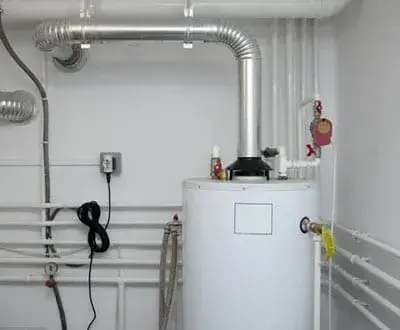
If the repair seems straightforward, I explain which parts and labor are required, how long the work will take, and present a realistic warranty for both parts and labor. If replacement looks likely, I outline options, efficiency differences, and a projected cost range, with the note that site factors can change the final price.
When repair is usually the right call Repair makes sense when the expected remaining life of the system exceeds the cost of the repair divided by the annual savings from a new unit. Practically speaking, I lean toward repair under several recurring conditions:
- Recent installation, young equipment under 5 to 7 years, where a major component failure is unlikely to recur. A single clear, inexpensive component failure, such as a capacitor, contactor, or a clogged drain causing the overflow safety switch to trip. The system has been well maintained with documented service history, meaning fewer hidden failure points. Temporary financial constraints where a repair preserves comfort until replacement becomes affordable. A repair that involves labor only, or parts with straightforward installation and low risk of collateral damage.
For example, replacing a failed run capacitor or a burned relay commonly costs between $150 and $350 installed in Wood River. That is usually an economical fix. Compressor failures, by contrast, often cost $1,200 to $2,000 to replace on older units and can be a tipping point toward replacement.
When replacement is usually the better investment Replacement becomes the stronger financial and reliability choice in several scenarios, especially with aging equipment.
- The system is older than 10 to 12 years and has not been regularly maintained, increasing the chance of additional failures. The compressor has failed, particularly on a system older than 8 years or when refrigerant type complicates service. You face recurring repairs, defined as more than two significant fixes in a single cooling season or three within five years. The unit runs inefficiently, causing high energy bills compared to the modeled usage for a new high-efficiency system. There are indoor comfort issues tied to mismatched components, such as an oversized condensing unit on an undersized evaporator coil, or a gas furnace and AC with incompatible airflow ratings.
Replacing a compressor on a 15-year-old unit is usually wasteful. The compressor is the most expensive component and its failure often presages failure of other parts. For many homeowners in Wood River the smarter long-term choice is to invest in a modern system that provides efficient cooling and a full manufacturer warranty.
Understanding the cost difference Expect broad ranges because each house is unique. A simple repair for a capacitor or contactor will typically land between $150 and $350. Compressor replacements, if possible, can range from $1,200 to $2,500 or more depending on refrigerant and labor. Full system replacements for typical single-family homes in the Wood River area commonly start around $4,000 for basic systems and move upward to $8,000 or $10,000 for higher-efficiency equipment and modifications such as upgraded thermostats, new ductwork, or additional zoning.
Think in terms of the 50 percent rule. If repair costs approach half the replacement cost and the unit is over eight years old, replacement usually offers better value. That rule is not absolute, but it provides a useful anchor during the decision.
Efficiency, rebates, and long-term savings New air conditioners carry Seasonal Energy Efficiency Ratio or SEER ratings that matter to operating cost. Older systems often sit between 8 and 10 SEER; modern units typically start at 14 SEER and go above 20 SEER for premium models. Each SEER point can shave operating costs, but the payback period depends on your usage. For a Wood River household using AC heavily through June, July, and August, moving from a 10 SEER to a 16 SEER might reduce cooling energy use by roughly 35 percent under some conditions. That translates to meaningful dollar savings over a decade.
Also check for local or federal incentives. Occasionally there are utility rebates or federal tax credits for high-efficiency installations. These incentives can lower upfront costs and shorten payback.
Sizing and ductwork matter more than many homeowners realize A common mistake is swapping a system 1-for-1 without addressing airflow or duct issues. An oversized condenser that cools the air too quickly will short-cycle, causing humidity problems and more wear. Undersized ductwork or leaky ducts reduce effective capacity and increase runtime, which increases wear and energy use.
During replacements we measure the house and perform a Manual J load calculation to size equipment properly, and often recommend duct sealing, adding insulation, or balancing the system with dampers. That adds to the project cost but improves comfort and longevity. For example, sealing a leaky duct system can reduce cooling runtime by 10 to 20 percent in some homes, paying back in energy savings and reduced compressor stress.
Warranty and reliability trade-offs When you repair, parts often carry short manufacturer warranties, typically one year. Labor warranties vary by company. With replacement you can get a longer manufacturer warranty on the compressor and parts, and reputable installers offer labor warranties that extend that protection. Choosing a recognized brand with local support also matters. At B & W Heating & Cooling we back installations with both parts and labor guarantees, and we document maintenance schedules so future buyers see a service history.
Edge cases and special situations Historic homes present unique challenges. Older homes often have tight attic spaces and nonstandard duct runs. Sometimes a smaller high-efficiency ductless mini-split system makes sense to avoid expensive ductwork replacement. Ductless systems are particularly valuable in add-ons, sunrooms, or multi-family units where running new ducts is impractical.
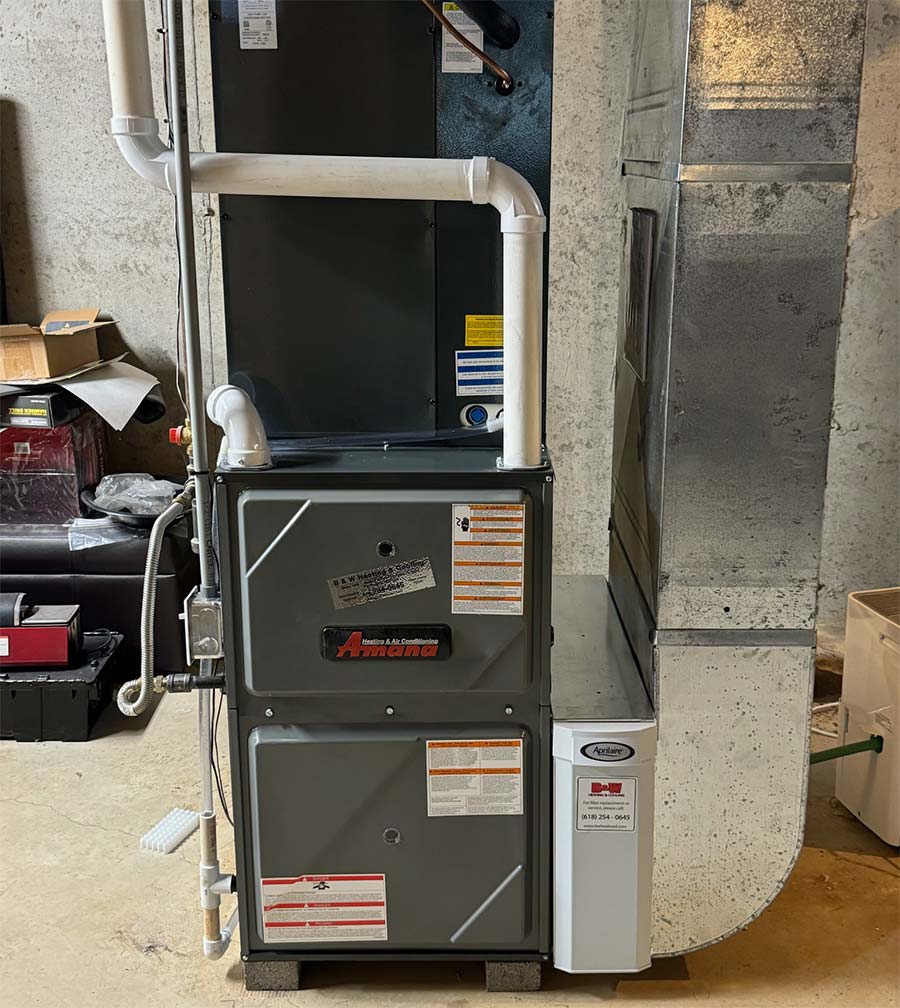
If your house AC Repair in Wood River IL has a two-stage or variable-speed furnace and a mismatched single-stage AC, it may be worth replacing both components to achieve proper airflow and humidity control. I once advised a homeowner to replace both units even though only the AC was failing. The combined investment improved comfort markedly and reduced month-to-month electric consumption.
Practical timeline and disruption A typical repair visit takes one to three hours. A full system replacement usually requires a day to three days depending on whether ductwork or electrical upgrades are needed. Expect some noise and disruption; plan for technicians to need access to the attic and outdoor condenser pad. For replacement, you should receive a written proposal that states equipment, efficiency rating, estimated timeline, and a clear warranty statement.
How to choose an installer Technical competence matters, but so does communication and reliability. Look for licensed HVAC contractors with solid local references AC Repair in Wood River IL B & W Heating & Cooling and transparent proposals. Ask for proof of insurance and licensing. A good installer will perform load calculations, verify duct condition, and explain why they recommend repair or replacement. They will not pressure you into a replacement when a reasonable repair will extend the system's life at less cost.
If you receive multiple quotes, compare them on apples-to-apples terms. Check whether the quote includes removal and disposal of the old unit, permit costs, necessary electrical upgrades, and thermostat programming. Ask about the brand’s local service network and parts availability. For AC Repair in Wood River IL this local knowledge matters because supply chains and refrigerant availability vary.
Maintenance that extends life and reduces repair bills Regular maintenance prevents many of the problems that force the repair versus replace decision. I recommend at least annual preventive maintenance for both cooling and heating seasons. A typical maintenance visit includes cleaning or replacing filters, cleaning coils, checking refrigerant charge, testing capacitors and contactors, and lubricating motors as required. For many systems, good maintenance can extend life by two to five years and reduce emergency calls.
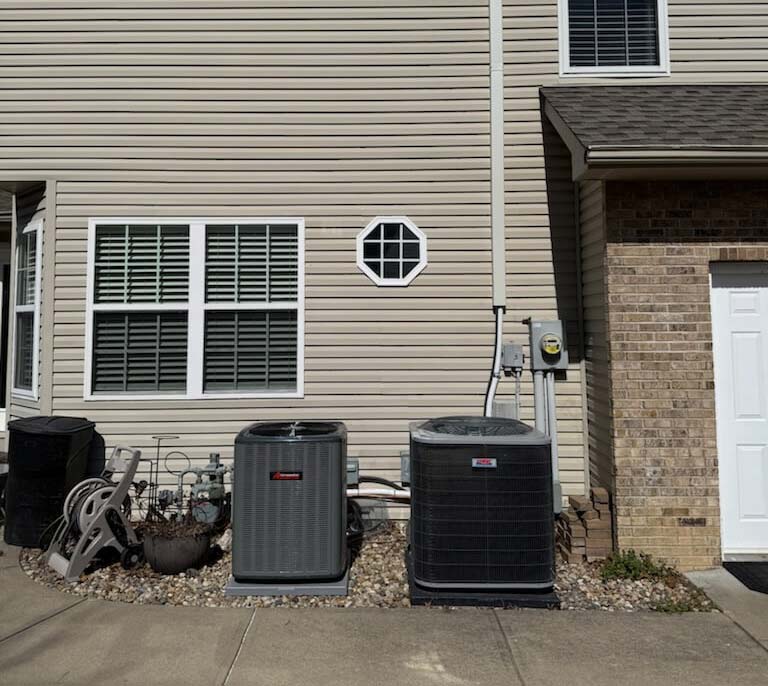
A short checklist for homeowners before calling
- Check the thermostat settings, change the filter, and make sure the outdoor unit is not obstructed. Note the symptoms, when they started, and whether anything (like a storm) preceded them. Gather any service records and the unit’s age if you know it. Avoid DIY refrigerant handling; refrigerant work requires licensed technicians.
Choosing between a short-term repair and a full replacement is rarely a purely technical call. It is a judgment that blends equipment condition, homeowner finances, expected remaining life, energy cost considerations, and long-term plans for the property. If you plan to stay in the house for many years, investing in a new efficient unit often pays for itself in comfort and lower bills. If you will sell in the near term and a repair restores reliable operation, that can be the right choice.
If you want help, call us for a diagnostic visit. When homeowners book AC Repair in Wood River IL with B & W Heating & Cooling we perform a thorough inspection, show the data, and present clear options with transparent pricing. No surprises, and no jargon-heavy sales pitch, just straightforward advice based on hands-on experience with local homes and climate.
Scheduling the right next step If you are noticing uneven cooling, odd noises, frequent short cycling, or rising electric bills, document the symptoms, take a few photos of the outdoor unit and any error codes on the thermostat, and arrange a prompt diagnostic. Timely intervention often turns a crisis into a manageable repair, or it makes the replacement window clear and unambiguous. Either way, an informed choice prevents unnecessary costs and keeps your home comfortable through the heat.
B & W Heating & Cooling handles both repairs and full-system replacements in Wood River. Our technicians carry the tools to diagnose reliably and the experience to explain trade-offs. When you need AC Repair in Wood River IL, we treat the choice pragmatically, with the goal of restoring comfort and maximizing the value of your investment.
B & W Heating & Cooling
3925 Blackburn Rd, Edwardsville, IL 62025
+1 (618) 254-0645
[email protected]
Website: https://www.bwheatcool.com/